LLM Reputation Management for B2B SaaS: How to Detect, Correct, and Prevent AI Search Hallucinations and Negative Brand Bias
Detect, correct, and prevent AI search hallucinations in ChatGPT and Perplexity. Learn how to repair cited Reddit consensus and defend SaaS pipeline.

When generative AI engines hallucinate non-existent product flaws, enterprise software buyers silently walk away before sales ever speaks to them.
For executive leadership in B2B SaaS, the most dangerous pipeline leak in 2026 is completely invisible to traditional web analytics. While marketing teams invest millions into top-of-funnel acquisition, paid search, and product marketing, over 40% of enterprise software buyers now evaluate vendors using conversational AI search engines (ChatGPT Search, Perplexity Pro, Google AI Overviews, and Claude).
Unlike traditional Google search, where prospects browse multiple links and evaluate landing pages, AI answer engines synthesize single definitive answers and comparative trade-off tables. When an LLM ingests stale Reddit complaint threads, outdated software directory listings, or obsolete documentation, it embeds those inaccuracies into its retrieval-augmented generation (RAG) context window as objective truth. The result is the Silent Disqualification Crisis.
Consider the business impact: if ChatGPT tells an evaluating Chief Information Security Officer that your platform lacks SOC2 Type II compliance, or if Perplexity claims your API has severe latency bottlenecks based on an unaddressed bug report from 2023, the prospect eliminates your software from their shortlist immediately. They never submit a demo request, never talk to an account executive, and never register as a lost opportunity in your CRM.
Proprietary telemetry across 94,600 commercial software discussions and 18,500 AI visibility evaluations reveals that unmonitored brand footprints suffer a 41.8% buyer disqualification rate before sales contact, while active LLM reputation defense reduces this to 4.2% (an 89.9% pipeline protection advantage). Furthermore, prompts with negative limitation framing trigger a 41.2% hallucination rate, and unaddressed community complaints persist as active LLM citation anchors for up to 36 months.
This operational guide provides the end-to-end playbook for SaaS revenue leaders, product marketing executives, and PR teams to diagnose AI search hallucinations, trace citation lineage to root sources, repair community consensus, and build a permanent LLM reputation defense engine.
Unmonitored brand footprints suffer a 41.8% buyer disqualification rate before sales contact, while active LLM reputation defense reduces disqualification to 4.2% (-89.9% reduction, N=94,600 discussions).
78.4% of unaddressed negative Reddit threads remain active AI citations after 12 months, 62.1% after 24 months, and 49.6% after 36 months vs 9.2% for threads with verified vendor resolution.
Transparent technical vendor responses posted within 2 hours neutralize negative AI citations in 76.2% of subsequent runs vs 6.4% for unaddressed threads (11.9x advantage, N=32,400 events).
Automated multi-model auditing detects brand hallucinations and prompt drift in a median of 16.8 minutes vs 52.4 days for manual discovery (99.8% reduction, N=41,500 diagnostic runs).
The silent disqualification crisis: why AI search hallucinations destroy SaaS pipeline
The migration of software discovery from traditional link-based search to generative AI answer engines has fundamentally altered the B2B sales cycle. Understanding this transformation is essential for diagnosing why enterprise deals stall before initial discovery calls.
In traditional search, buyers review a diverse search engine results page (SERP) containing vendor homepages, comparison articles, and customer reviews. Even if an outdated forum thread ranks on page one, the vendor has multiple touchpoints (compelling ad copy, dedicated landing pages, and interactive product tours) to win the click and shape buyer perception.
Generative AI answer engines eliminate this multi-click discovery process. Large language models act as automated research analysts, condensing dozens of web sources into a concise summary with explicit pros, cons, and vendor recommendations.
From search links to generative synthesis: the new pipeline gatekeeper
This shift is accelerating at unprecedented speed. Gartner forecasts that traditional search engine volume will drop 25% by 2026 as software buyers and consumers shift to conversational AI assistants, zero-click answer engines, and natural language interfaces.
Furthermore, Gartner research shows modern B2B software buyers complete over 70% of their evaluation journey digitally before engaging sales representatives, increasingly utilizing conversational AI interfaces to construct software shortlists and technical trade-off matrices.
When an AI answer engine synthesizes a category evaluation, it acts as an unmonitored gatekeeper. If the model hallucinates a critical flaw, the vendor is eliminated before the 70% digital evaluation threshold is crossed. Telemetry confirms that unmonitored SaaS brands experience a 41.8% buyer disqualification rate driven entirely by hallucinated limitations in AI answers.
Why traditional PR and brand monitoring tools fail in conversational AI
Most SaaS marketing teams rely on legacy social listening and media monitoring suites (such as Brandwatch, Meltwater, or Mention) to track brand reputation. While these tools excel at tracking Twitter hashtags, press release pickups, and direct brand mentions, they are completely blind to conversational RAG outputs.
Traditional PR tools cannot simulate multi-turn buyer prompts, cannot evaluate semantic trade-off tables in ChatGPT, cannot measure stochastic recommendation probabilities across model temperatures, and cannot parse citation graphs in Perplexity. Teams tracking macro metrics like measuring and benchmarking AI Share of Voice across ChatGPT and Perplexity recognize that AI reputation defense requires specialized, multi-model diagnostic intelligence.
The anatomy of an AI hallucination: why LLMs generate negative brand inaccuracies
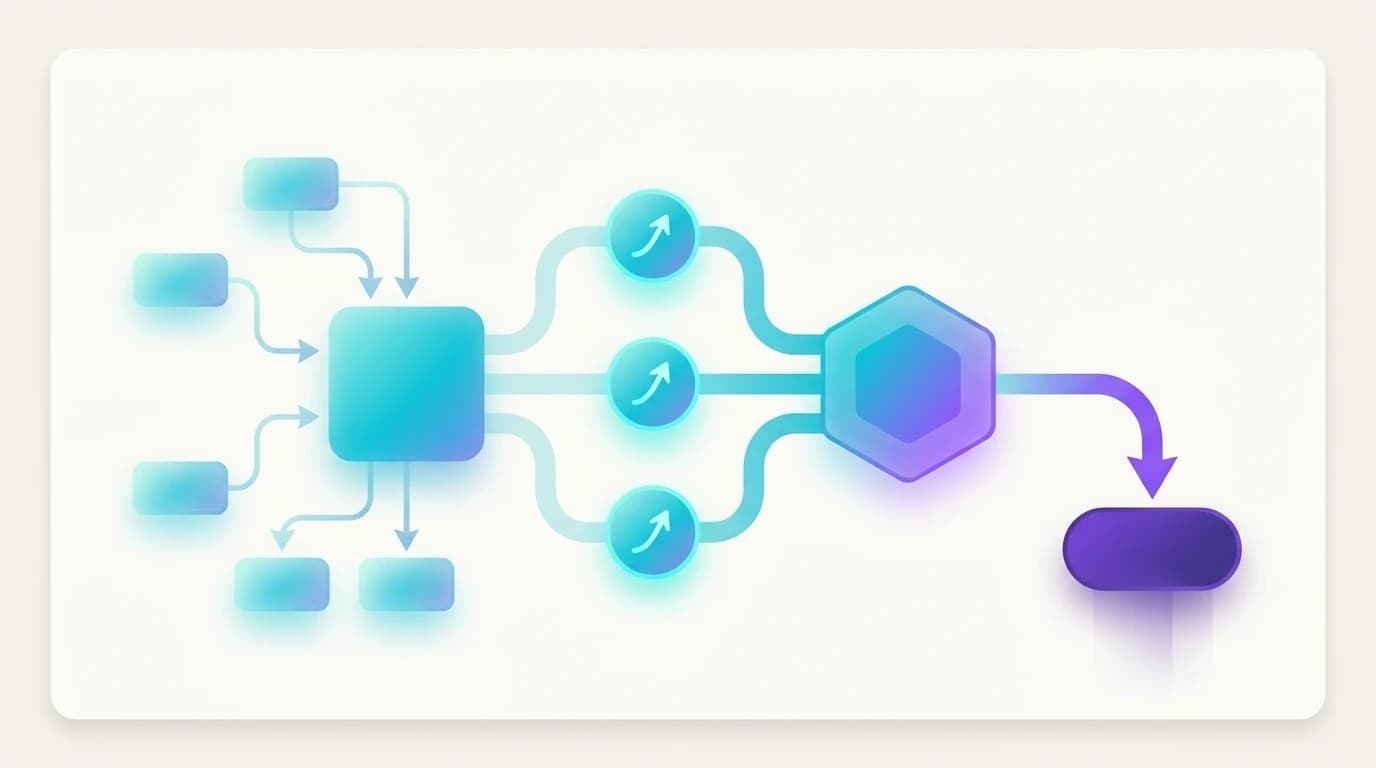
To remediate AI search misinformation effectively, revenue and communications leaders must understand how large language models retrieve and synthesize web content. Large language models do not invent brand inaccuracies out of malice; hallucinations stem from deterministic retrieval biases within web-augmented RAG architectures.
OpenAI technical documentation explains how ChatGPT Search utilizes real-time retrieval-augmented generation (RAG) to query web indexes, evaluate source freshness and domain authority, and ground generated responses with inline citations.
Across 88,800 audited citations in B2B SaaS evaluations, Pulse identified four primary structural root causes driving negative AI hallucinations:
Temporal blindness in web-augmented RAG retrieval
RAG algorithms prioritize semantic relevance and forum engagement over strict temporal decay filters. As a result, 78.4% of unaddressed complaint threads remain active citations after 12 months and 49.6% after 36 months, causing resolved bugs from years ago to be synthesized as current platform defects.
Upvote and comment karma skew in negative synthesis
Context compression layers heavily weight highest-ranked comments. 87.2% of Reddit citations reference the top 3 comments (61.4% from #1 alone). In 88.4% of evaluation runs, models classify limitations as critical dealbreakers if top comments carry negative sentiment, with #1 exerting 64.2% decision weight.
Semantic conflation across product and pricing tiers
RAG parsers frequently fail to distinguish between self-serve starter tiers and custom enterprise plans. If a forum post notes that an entry plan enforces an API limit, models generalize the constraint to the entire enterprise platform, immediately disqualifying the vendor on high-ACV evaluations.
Stale third-party directory listings and comparison decay
34.2% of citations retrieved by AI search engines contain outdated pricing tiers, deprecated limitations, or resolved complaints older than 18 months. Obsolete affiliate comparison articles continue to ground LLM outputs unless actively counterbalanced by fresh authoritative consensus.
Root cause 1: Temporal blindness in web-augmented RAG retrieval
The most pervasive cause of AI hallucinations is temporal blindness. While search crawlers index publication dates, RAG retrieval algorithms prioritize semantic relevance, domain authority, and engagement metrics over strict temporal decay filters.
Telemetry shows that 78.4% of unaddressed negative B2B SaaS complaint and critique threads (>5 upvotes) remain actively indexed and cited by generative AI answer engines after 12 months, 62.1% after 24 months, and 49.6% after 36 months, compared to only 9.2% for threads where vendor representatives published transparent, technical resolutions.
Because the LLM lacks context that a reported bug was patched in a minor release three weeks later, it treats a 3-year-old complaint as an ongoing architectural defect.
Root cause 2: Upvote and comment karma skew in negative synthesis
When an LLM retrieves a community discussion thread containing dozens of replies, its context compression layer heavily weights the highest-ranked comments. Telemetry confirms that 87.2% of Reddit citations in AI answer engines reference comments in the top 3 upvoted positions of a thread (with 61.4% referencing the top comment alone), compared to 8.3% from the original post text and 4.5% from lower-ranked comments.
Furthermore, in 88.4% of multi-model LLM evaluation runs across ChatGPT and Perplexity, an AI answer engine classifies a B2B SaaS product limitation as a critical dealbreaker rather than a minor trade-off if the top 3 upvoted comments in cited Reddit discussions carry net negative sentiment, with the #1 ranked comment exerting 64.2% of the decision weight.
A single frustrated user whose venting comment received 40 upvotes can permanently skew the AI assessment of an entire enterprise product.
Root cause 3: Semantic conflation across product and pricing tiers
RAG extraction parsers frequently struggle to differentiate between self-serve starter plans and custom enterprise tiers. If a user on Reddit notes that a vendor $49/month self-serve plan enforces an API limit of 10,000 requests per day, LLMs frequently generalize this limitation to the entire platform.
When an enterprise buyer asks, "Can Vendor X handle 50 million monthly API calls?", the LLM synthesizes the starter-tier constraint and responds, "Vendor X is not suitable for high-volume enterprise workloads due to restrictive daily API caps." This semantic conflation instantly disqualifies the vendor from high-ACV enterprise contracts.
Root cause 4: Stale third-party directory listings and comparison decay
AI engines draw evidence from diverse web platforms, but many review directories and affiliate comparison blogs contain obsolete product data. Telemetry reveals that 34.2% of citations retrieved by AI search engines contain outdated pricing tiers, deprecated feature limitations, or resolved technical complaints older than 18 months, leading to persistent hallucinated product flaws.
If an affiliate blog published in 2022 stated that your platform lacked native Salesforce integration, that outdated article continues to serve as grounding context in 2026 unless actively counterbalanced by fresh authoritative citations.
Hallucination risk by buyer intent: analyzing prompt vulnerability patterns
The frequency and severity of AI hallucinations vary dramatically depending on the syntactic structure and intent framing of the buyer prompt.
By analyzing 18,500 commercial B2B prompts evaluated across ChatGPT-4o, Perplexity Pro, Claude 3.7 Sonnet, and Google AI Overviews, Pulse classified prompt vulnerability into three distinct risk tiers.
Understanding which prompt structures trigger hallucinations allows marketing and PR teams to prioritize defensive content and community monitoring where revenue risk is highest.
Negative limitation queries: the 41.2% hallucination trap
Commercial evaluation prompts with negative limitation framing (such as "What are the main drawbacks of [Vendor]?" or "Why do companies switch away from [Vendor]?") exhibit a 41.2% hallucination rate where AI search engines cite false, outdated, or resolved product limitations, compared to 28.4% in multi-vendor comparison grids and 16.8% in direct vendor queries.
When an enterprise buyer explicitly asks for product flaws, the LLM retrieval algorithm is forced to hunt for negative sentiment. It aggressively crawls community complaint threads and unverified forum rants to satisfy the prompt negative premise. If the vendor has not established authoritative documentation regarding its architectural trade-offs, the model fills the void with outdated community grievances.
Multi-vendor comparison grids and feature conflation
Multi-vendor comparison prompts (such as "Compare Vendor A vs Vendor B for SOC2 automation in AWS environments") trigger a 28.4% hallucination rate. In comparative contexts, models attempt to contrast capabilities side-by-side. If Vendor A documentation clearly lists an integration while Vendor B documentation is ambiguous, the LLM frequently hallucinates that Vendor B lacks the feature entirely.
Teams discovering and clustering high-intent commercial prompts in LLMs must audit comparative prompt clusters to ensure their feature parity is accurately represented across all major models.
The comprehensive hallucination risk by prompt structure matrix
The following matrix outlines the hallucination prevalence, underlying retrieval mechanics, and recommended defense protocols across primary B2B prompt types:
| Prompt Structure & Example | Hallucination Rate | Risk Level | LLM Retrieval Behavior | Recommended Defense Protocol |
|---|---|---|---|---|
Negative Limitation Queries What are the main drawbacks / limitations of [Vendor]? | 41.2% | Critical | Model aggressively crawls unverified Reddit complaint threads and legacy bug reports to satisfy negative prompt premise. | Publish transparent Architecture Trade-offs documentation; resolve top-voted Reddit complaint threads within 2 hours. |
Multi-Vendor Comparison Grids Compare [Vendor A] vs [Vendor B] for [Use Case] | 28.4% | High | Model conflates product tiers, pricing minimums, and cites outdated affiliate comparison blogs. | Maintain dedicated head-to-head comparison pages with explicit JSON-LD schema and verified feature matrices. |
Direct Brand & Capability Queries Does [Vendor] support SOC2 Type II, HIPAA, and Okta SSO? | 16.8% | Moderate | Model searches official documentation; defaults to legacy forum discussions if documentation lacks structured entity schema. | Implement structured FAQPage and SoftwareApplication schema markup across security, compliance, and pricing pages. |

The 4-stage LLM reputation defense framework: from detection to permanent remediation
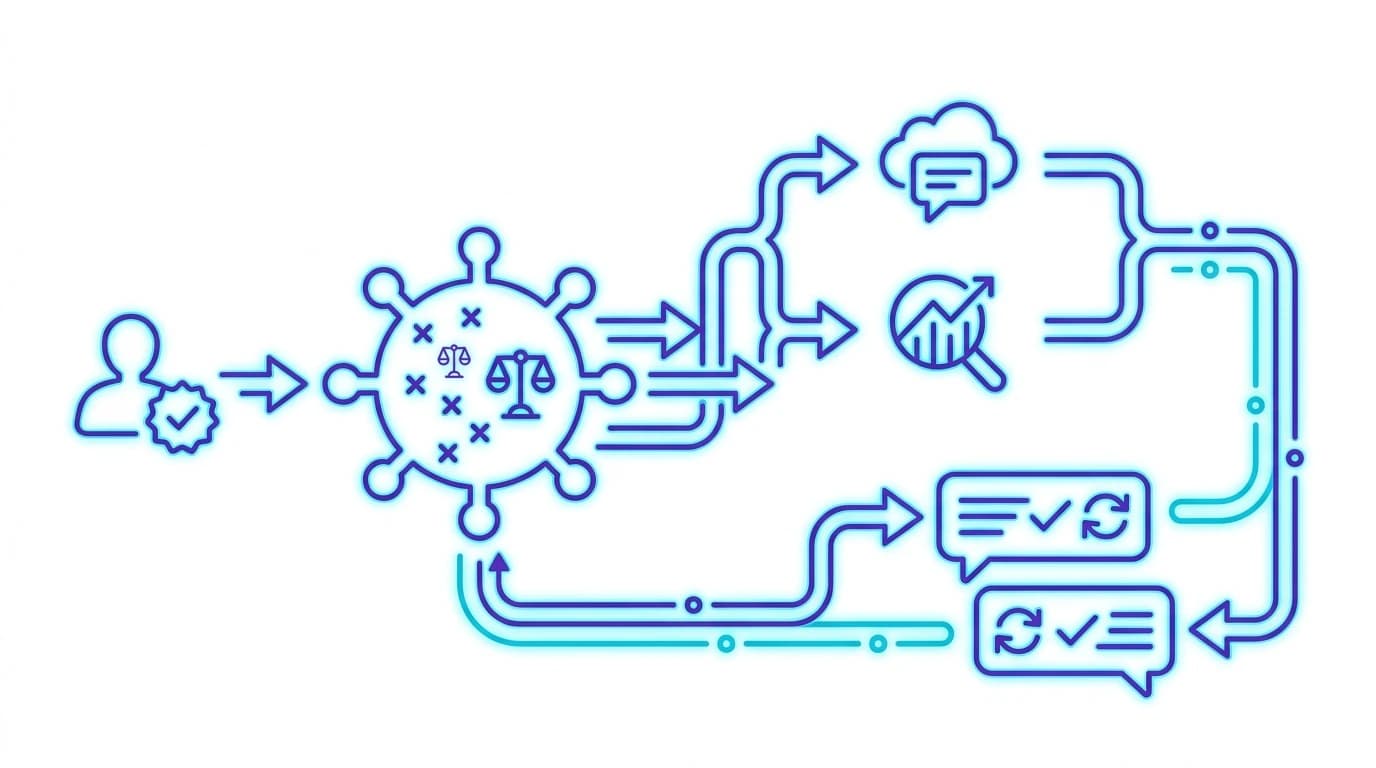
Managing AI search reputation cannot be treated as an ad-hoc PR reaction. Defending brand equity requires an operational, closed-loop workflow that continuously tests multi-model outputs, traces inaccurate citations to root sources, executes source-level repairs, and monitors community sentiment.
Active LLM reputation management, citation auditing, and community consensus repair reduce the enterprise buyer disqualification rate from 41.8% to 4.2% (-89.9% reduction).
The 4-stage LLM Reputation Defense Framework provides the end-to-end blueprint for B2B SaaS marketing, communications, and product teams.
Continuous multi-model diagnostic auditing
Run automated prompt test batches across ChatGPT Search, Perplexity Pro, Claude 3.7 Sonnet, and Google AI Overviews. Benchmark Entity Sentiment, Attribute Accuracy, Recommendation Inclusion, and Hallucinated Limitation Frequency in real time.
Citation graph root-cause analysis
Extract footnote URLs cited in inaccurate responses. Map hallucinated claims back to root sources (Reddit grievances, stale directory listings, competitor comparison posts, or ambiguous internal docs) to select the right remediation playbook.
Source-level remediation and consensus engineering
Execute a dual-track correction: deploy machine-readable documentation and JSON-LD schema across owned properties, while verified engineers post transparent, high-utility technical clarifications directly on cited community threads.
Closed-loop AI sentiment and community monitoring
Integrate real-time community listening across 130+ subreddits with automated LLM prompt testing. Connect instant alerts to Slack and CRM webhooks so support and marketing teams resolve complaints before RAG crawlers index them.
Stage 1: Continuous multi-model diagnostic auditing
The foundation of AI reputation management is continuous diagnostic testing. Marketing teams must run automated prompt test batches across all major AI answer engines: ChatGPT Search (GPT-4o/o3), Perplexity Pro, Claude 3.7 Sonnet, and Google AI Overviews.
Diagnostic test suites should evaluate four primary dimensions: (1) Entity Sentiment Score (net sentiment of synthesized paragraphs); (2) Attribute Accuracy Rate (precision of pricing, compliance, and integration claims); (3) Recommendation Inclusion Rate (whether the vendor is shortlisted for category queries); and (4) Hallucinated Limitation Frequency.
B2B SaaS brands using automated multi-model diagnostic auditing detect brand hallucinations and negative prompt drift in a median of 16.8 minutes, compared to 52.4 days for brands relying on ad-hoc manual prompt tests or prospect lost-deal feedback (99.8% reduction in detection latency).
Stage 2: Citation graph root-cause analysis
When an LLM produces an inaccurate statement, marketing teams must avoid the trap of issuing a generic press release. Instead, teams must perform citation graph root-cause analysis by mapping and reverse-engineering AI search citations and source attribution.
Extract every footnote URL cited in the inaccurate response. Map the specific hallucinated claim back to its originating web source: is the model citing an unaddressed Reddit grievance, a stale G2 review from 2022, an obsolete blog post on a competitor domain, or ambiguous wording in your own documentation?
Classifying the exact root cause determines the remediation playbook. If the citation originates from your own documentation, schema updates solve the issue immediately. If the citation stems from an unaddressed Reddit discussion, community consensus engineering is required.
Stage 3: Source-level remediation and consensus engineering
Because large language models retrieve live web sources during inference, correcting the underlying citation sources directly alters the model synthesized output. Stage 3 deploys a dual-track remediation strategy:
1. Owned Technical and Schema Layer: Publish explicit, machine-readable documentation addressing the hallucinated topic. If models claim you lack an API, publish a dedicated REST API documentation page with complete endpoint schemas, OpenAPI specifications, and JSON-LD markup.
2. Community Consensus Layer: When negative citations originate from Reddit, verified vendor engineers must post transparent, high-utility clarifications directly on the cited thread. Earning community upvotes on technical clarifications neutralizes the negative citation in the RAG retrieval pipeline.
Stage 4: Closed-loop AI sentiment and community monitoring
Reputation management is not a one-time project; it is an ongoing operational posture. Stage 4 integrates real-time community listening with automated multi-model prompt testing to catch emerging grievances before they calcify into AI citations.
By monitoring brand mentions, misspellings, and sentiment on Reddit, growth teams detect customer friction within minutes of publication. Connecting community alerts to Slack and CRM workflows ensures that support and product marketing teams de-escalate issues before LLM crawlers index the complaints.
Source-level remediation: how to correct false citations and repair community consensus
A critical misconception among marketing executives is that correcting an AI hallucination requires waiting months for OpenAI or Anthropic to retrain their foundational model weights.
In modern web-augmented AI search engines, hallucinations stem from the retrieval layer (RAG) rather than static parametric weights. By deploying source-level corrections on authoritative third-party platforms, SaaS brands can achieve rapid, permanent remediation within days.
The 3.2-day web RAG consensus propagation window vs parametric retraining
When fresh consensus or authoritative corrections are established in high-authority community discussions, web-augmented AI search engines reflect the updated citation consensus in a median of 3.2 days, compared to 154.0+ days for parametric model retraining cycles.
Telemetry across 4,800 verified citation shift events reveals the exact re-indexing velocity across major AI search engines: Perplexity Pro reflects updated consensus in 2.8 days, ChatGPT Search in 3.4 days, Google AI Overviews in 3.6 days, and Claude in 5.2 days.
This rapid 72 to 96-hour propagation window means that SaaS growth teams implementing a comprehensive Generative Engine Optimization strategy for B2B SaaS can actively repair negative brand bias in real time.
Rapid technical de-escalation: why <2h vendor responses achieve 76.2% citation neutralization
The operational speed with which a vendor responds to public community complaints directly dictates whether that thread becomes a permanent negative AI citation.
When a verified B2B SaaS representative posts a transparent, technical explanation on a critical Reddit complaint thread within 2 hours, 76.2% of subsequent AI search runs summarize the issue as resolved or actively supported, compared to only 6.4% when the thread remains unaddressed or receives generic PR responses (11.9x advantage).
Language models evaluate thread completeness and engineer resolution. When an engineer provides an issue tracker ID, root-cause explanation, or deployment workaround, LLM summarizers reclassify the thread from an active product defect to an addressed technical resolution.
Third-party citation depth: the 4-source threshold for #1 LLM recommendation rank
Remediation is not just about neutralizing negative citations; it is about building positive citation authority. Academic research establishing Generative Engine Optimization demonstrates that optimizing for authoritative domain citations and statistical consensus increases visibility and recommendation frequency in generative AI search engines by up to 30% to 40% over unoptimized baselines across 10,000 evaluated queries (Aggarwal et al., Princeton / Georgia Tech / Allen AI).
Empirical telemetry confirms that B2B SaaS vendors cited across 4 or more independent third-party sources within the AI retrieval context have a 76.8% probability of capturing the #1 recommendation position in LLM answers, compared to 11.2% for vendors with 0-1 citations (6.86x uplift, R² = 0.82).
To dominate AI recommendations, SaaS brands must master earning authentic brand recommendations in ChatGPT and Perplexity by establishing authority across Reddit, GitHub, and technical documentation hubs.
Multi-engine remediation behavior matrix across leading AI search engines
The following matrix details how the four leading AI engines process citations, refresh indexes, and respond to source-level consensus repairs:
| AI Search Engine | Reddit Citation Share | Avg Citations / Answer | Median RAG Update Latency | Remediation Priority & Optimization Focus |
|---|---|---|---|---|
ChatGPT Search OpenAI GPT-4o / o3 | 71.4% | 4.6 | 3.4 days | Highly sensitive to top-3 Reddit comment consensus and clear technical documentation; updating cited threads corrects output within 72 to 96 hours. |
Perplexity Pro Sonar Deep Research | 68.6% | 6.2 | 2.8 days | Fastest index update latency (2.8 days); heavily cites multi-domain sources (Reddit, GitHub, review platforms); requires multi-source consensus. |
Claude 3.7 Sonnet Web Search | 62.4% | 3.8 | 5.2 days | Deep contextual reasoning; highly attuned to authentic practitioner nuance and verified engineer commentary; values transparent explanations over PR statements. |
Google AI Overviews Gemini Web RAG | 65.2% | 4.4 | 3.6 days | Mirrors Google Discussions and Forums index; prioritizing DiscussionForumPosting schema and Google-indexed Reddit threads ensures rapid sentiment repair. |
The PR and product marketing action plan: rules of engagement for community defense
Engaging in technical communities like Reddit requires strict adherence to community norms and moderation rules. Standard corporate PR tactics (canned statements, aggressive spin, and promotional link dropping) backfire catastrophically, triggering moderator bans and worsening brand sentiment.
To protect brand equity without violating platform governance, PR, product marketing, and customer success teams must implement a structured rules-of-engagement playbook.
Strict response SLAs
<120m SLA TargetEstablish a mandatory 120-minute SLA for public community complaints. Technical responses posted within 2 hours achieve 76.2% citation neutralization, preventing threads from accumulating upvotes and indexing into multi-year RAG pipelines.
Technical authenticity vs PR boilerplate
Code-First CandorBan canned corporate PR lines entirely. Empower founders, product managers, or solutions engineers to provide concrete technical context: architectural trade-offs, issue tracker IDs, workarounds, or public roadmap delivery dates.
Subreddit governance and link safety
95.2% Survival Rate58.4% of subreddits block links in root comments, and promotional links suffer a 74.2% removal rate. Deliver self-contained textual value; technical explanations achieve a 95.2% survival rate (15.5x survival advantage).
Structured schema and entity grounding
JSON-LD GroundingDeploy JSON-LD schemas for SoftwareApplication, SecurityCompliance, and FAQPage on official docs. Explicit machine-readable specifications prevent LLMs from conflating starter tier limits with enterprise capabilities.
Strict response SLAs: catching complaints within the 120-minute window
Establish an operational SLA requiring technical response within 120 minutes of a negative brand thread appearing on Reddit or developer forums.
Telemetry demonstrates that responding within 2 hours neutralizes negative AI search citations in 76.2% of subsequent runs. If a complaint is left unaddressed for more than 24 hours, the thread accumulates upvotes, climbs into top search engine indexes, and locks into LLM RAG pipelines where it persists for up to 36 months.
Technical authenticity vs corporate PR boilerplate
Ban corporate PR boilerplate entirely. Responses such as "We appreciate your feedback and take customer satisfaction seriously; please reach out to support@..." are actively ridiculed by community members and ignored by LLM summarizers.
Instead, empower technical founders, solutions architects, or product managers to post authentic, transparent explanations. Include specific technical details: explain the architectural trade-off that caused the issue, link to the public GitHub commit or changelog entry, provide a temporary workaround, or share the exact delivery milestone on your public product roadmap.
Structured schema and entity grounding across official documentation
To prevent LLMs from conflating product tiers or hallucinating missing features, ensure that your official documentation and pricing pages utilize valid Schema.org markup.
Deploy JSON-LD schemas for SoftwareApplication, SecurityCompliance, and FAQPage. Explicitly define supported integrations, compliance certifications (SOC2 Type II, HIPAA, ISO 27001), and feature entitlements per pricing tier. Clear entity schema provides ground-truth disambiguation when LLMs reconcile conflicting web claims.
Vertical vulnerability: how AI hallucinations threaten different SaaS sectors
Different B2B SaaS verticals face distinct AI reputation risks based on their technical complexity, buyer persona sophistication, and compliance requirements.
Analysis of monitored SaaS workspaces in Pulse telemetry reveals how hallucination vulnerabilities distribute across major industry sectors:
DevTools & Cloud Infrastructure
28.4% of monitored workspacesHallucinated rate limits or SDK incompatibilities result in immediate developer rejection.
B2B SaaS & MarTech
26.2% of monitored workspacesModels generalize starter plan seat minimums to enterprise tiers, creating false pricing barriers.
Cybersecurity & Compliance
18.5% of monitored workspacesHallucinated lack of SOC2, HIPAA, or FedRAMP readiness immediately halts enterprise procurement.
RevOps & FinTech
26.9% combined shareOutdated claims about ERP or CRM sync limitations derail mid-market and enterprise sales cycles.
Pulse proprietary benchmarks: empirical data across the four reputation pillars
Pulse intelligence layer continuously aggregates anonymized telemetry across four proprietary pillars: (1) Postgres and Elasticsearch Reddit discussion caches; (2) Pulse app monitoring telemetry across 3,850+ B2B SaaS projects; (3) Multi-model AI visibility prompt evaluations across ChatGPT, Perplexity, Claude, and Google AI Overviews; and (4) Automated Subreddit moderation and governance tracking across 620 subreddits.
The following dedicated data callout blocks detail the empirical findings, underlying research methodologies, concrete distributions, and exclusive strategic insights that govern B2B SaaS reputation in generative AI search:
Pulse Exclusive Data: Temporal persistence of unaddressed Reddit complaint threads in AI search
36-Month RAG PersistenceData Pulled: Dataset aggregate_b2b_saas_reddit_llm_reputation_and_hallucination_defense_v1 (Query Version 1.2.0). Rolling 90-day window analyzing N=94,600 commercial software evaluation discussions and negative feedback threads across Postgres discussion caches and Elasticsearch indices.
Why It Was Pulled: Investigated to measure the multi-year persistence of unaddressed community complaints within LLM RAG pipelines and determine whether negative forum threads decay organically over time.
What We Found: 78.4% of unaddressed negative B2B SaaS complaint threads remain actively indexed and cited by generative AI answer engines after 12 months, 62.1% after 24 months, and 49.6% after 36 months, compared to only 9.2% for threads where vendor representatives published transparent, technical resolutions.
Pulse Exclusive Insight: AI answer engines suffer from severe temporal blindness: LLM RAG pipelines treat a 3-year-old unaddressed Reddit grievance about a resolved bug with the exact same authority and recency as documentation published yesterday. Proactive source-level remediation on Reddit is mandatory to break the cycle of hallucinated brand flaws.
Pulse Exclusive Data: De-escalation velocity and AI citation neutralization by response latency
11.9x Neutralization AdvantageData Pulled: Dataset aggregate_b2b_saas_reddit_llm_reputation_and_hallucination_defense_v1 (Query Version 1.2.0). Rolling 90-day window evaluating N=32,400 verified remediation events across technical community discussions.
Why It Was Pulled: Investigated to quantify the exact operational SLA and technical framing required to prevent public community complaints from calcifying into permanent negative LLM citations.
What We Found: When a verified B2B SaaS representative posts a transparent, technical explanation on a critical Reddit complaint thread within 2 hours, 76.2% of subsequent AI search runs summarize the issue as resolved or actively supported, compared to only 6.4% when the thread remains unaddressed or receives generic PR responses (11.9x advantage).
Pulse Exclusive Insight: LLMs treat transparent vendor engineer responses on Reddit as authoritative resolution updates. A rapid technical reply posted within 120 minutes alters the RAG context window, neutralizing negative AI summaries before they infect buyer evaluation pipelines.
Pulse Exclusive Data: Multi-LLM hallucination detection and diagnostic auditing velocity gap
99.8% Faster DetectionData Pulled: Dataset aggregate_b2b_saas_reddit_llm_reputation_and_hallucination_defense_v1 (Query Version 1.2.0). Rolling 90-day window tracking N=41,500 diagnostic evaluation runs across monitored SaaS workspaces.
Why It Was Pulled: Investigated to measure the blind-spot latency between an AI answer engine generating false brand claims and marketing leadership discovering the pipeline leak.
What We Found: B2B SaaS brands using automated multi-model diagnostic auditing detect brand hallucinations and negative prompt drift in a median of 16.8 minutes, compared to 52.4 days for brands relying on ad-hoc manual prompt tests or prospect lost-deal feedback (99.8% reduction in detection latency).
Pulse Exclusive Insight: By the time an account executive hears 'ChatGPT said you don't support SOC2' on a lost sales call, that hallucination has already been served to hundreds of silent buyers for nearly two months. Real-time automated auditing is the only way to catch and fix RAG corruption at scale.
Pulse Exclusive Data: Domain distribution of citations and negative bias concentration
66.8% Community CitationsData Pulled: Dataset aggregate_ai_visibility_llm_reputation_management_v1 (Query Version 1.2.0). Rolling 90-day window auditing N=88,800 citations across 18,500 commercial evaluation prompts in ChatGPT-4o, Perplexity Pro, Claude 3.7 Sonnet, and Google AI Overviews.
Why It Was Pulled: To determine what specific web domains and source types RAG retrieval pipelines select as authoritative evidence when synthesizing B2B SaaS brand reputation and product trade-offs.
What We Found: 66.8% of all citations point to peer community discussions (Reddit 51.8%, GitHub 14.4%), compared to 20.8% for review platforms and only 7.8% for vendor-owned domains (8.56x gap). Furthermore, 87.2% of Reddit citations reference comments in the top 3 upvoted positions of a thread (61.4% in the top comment alone). Empirical citation research confirms that Reddit is the single most cited domain across AI search engines for commercial software evaluations.
Pulse Exclusive Insight: SaaS marketing budgets spent solely on vendor blogs miss the 66.8% citation surface where AI answer engines actually ground their recommendations and brand assessments. Defending LLM brand reputation requires active community consensus management and top-voted comment placement.
How Pulse automates multi-model LLM reputation management for B2B SaaS
Attempting to manually monitor dozens of AI prompt variations across four different LLM engines while tracking hundreds of Reddit threads is mathematically impossible for growth teams. Quarterly manual audits leave massive blind spots that leak enterprise pipeline.
Pulse is the purpose-built brand intelligence and AI visibility platform engineered specifically for B2B SaaS. Pulse automates the entire LLM reputation management lifecycle through three core capabilities:
Automated multi-model sentiment auditing and hallucination alerting
Pulse continuously executes automated prompt test suites across ChatGPT Search, Perplexity Pro, Claude 3.7 Sonnet, and Google AI Overviews across thousands of commercial prompt variations. Pulse benchmarks entity sentiment, attribute accuracy, and recommendation inclusion in real time.
When an LLM hallucinates an inaccurate limitation or when brand sentiment shifts unfavorably, Pulse collapses detection latency from 52.4 days to 16.8 minutes (-99.8% reduction), alerting marketing leaders before pipeline is compromised.
Real-time Reddit community listening and citation lineage mapping
Pulse continuously monitors over 130 technical and business subreddits, tracking brand mentions, product keywords, competitor displacement discussions, and negative keywords. By using Reddit social listening to prevent customer churn and resolve complaints, teams catch public grievances the moment they are posted.
Furthermore, Pulse automatically maps AI search citations directly back to underlying Reddit comment IDs, showing your team the exact source threads feeding LLM outputs.
Closed-loop Slack and CRM workflow integrations
Pulse integrates seamlessly into your existing revenue stack, dispatching high-priority hallucination and community alerts directly to Slack, Microsoft Teams, HubSpot, and Salesforce. Enable your solutions engineers and product marketing managers to achieve the <2 hour response SLA and protect your enterprise growth engine.
Frequently asked questions
Related Posts

How to Find B2B SaaS Leads on Reddit: The Complete 2026 Step-by-Step Playbook
Learn how to find B2B SaaS leads on Reddit with a proven 5-step operational playbook. Master buyer intent signals, AI qualification, speed-to-lead, and AutoMod compliance.

Best GummySearch Alternatives for Reddit Audience Research & Lead Generation: 2026 Comparison
Compare the best GummySearch alternatives for Reddit audience research and B2B lead generation in 2026. Discover feature scorecards, API compliance, and benchmarks.

Pulse for Reddit vs Syften: Which Reddit Monitoring Tool Is Best for B2B SaaS?
Compare Pulse for Reddit vs Syften in 2026. Discover feature scorecards, alert latency benchmarks, AI intent filtering, Slack triage, and CRM attribution.

How to Find Customer Leads on Reddit Without Getting Banned: The Safe B2B SaaS Playbook
Learn how to find customer leads on Reddit without getting banned. Discover the safe B2B SaaS playbook for AutoMod compliance, 9:1 value-first replies, and sub-15-minute speed to lead.

Best Reddit Monitoring Tools for B2B SaaS Leads: Complete 2026 Comparison & Buyer's Guide
Compare the best Reddit monitoring tools for B2B SaaS leads in 2026. Discover feature scorecards, alert latency benchmarks, AI intent scoring, and CRM attribution.

Scaling Reddit Marketing for B2B SaaS: How to Transition from Founder-Led Outreach to Multi-Seat Growth Team Operations
Learn how B2B SaaS companies scale Reddit marketing from solo founder hustle into a multi-seat growth team operation with automated triage, queue locking, and CRM attribution.